Dietary Restriction after Laparoscopic Cholecystectomy in Bangalore, HSR Layout, Koramangala

Diet Restrictions | Laparoscopic Cholecystectomy in Bangalore

When you face serious problems with your gallbladder, like gallstones, then your doctor is likely to recommend you to have your gallbladder removed through surgery. The major concern the patients have after getting their gallbladder removed is whether they can carry out the normal day-to-day activities. The second fear they have is whether they have to change their diet after gallbladder surgery or Cholecystectomy surgery.

Dr. Manas Tripathy, Best Laparoscopic Cholecystectomy Surgeon in Bangalore, has answered the common questions that arise in patients after a gall bladder removal. He has also shared some of the post-surgery lifestyle tips for faster and better recovery.

Now let us look at what should be included in your diet after you have your gallbladder removed.

Majorly people do not have to follow a special diet after going through the surgery of removing the gallbladder stone. The major reason behind it is because the gall the bladder does not have any direct relation with the digestion so that it does not matter much if you were not being asked to follow a strict diet. In most of the cases, doctors suggest that patients can start eating normally after the surgery, but they do say that you should start with small meals at regular intervals of time.

Here are some of the most important things that should be kept in mind right after you have got your gallbladder removed so that there should be no problem for the patient and for their closed ones as well. So kindly keep these things in mind that should be avoided so as to not invite any problem for anyone.

1. Drinks containing Caffeine

Caffeine | Laparoscopic Cholecystectomy in Bangalore

For the initial phase of the surgery, not only the doctors, but we would also suggest that please-please do not for the drinks that contain caffeine. We strictly mean that the drinks like tea, coffee, and cold drinks should be avoided at any point in time. If you continue having these drinks then it might become a huge problem because it would not let the scar to heal which would be there in your body after the surgery. These drinks would prolong the healing period. So please think about your health and avoid any such caffeinated drinks.

2. Avoid Spicy or Fatty Foods

Avoid Fatty food | Laparoscopic Cholecystectomy in Bangalore

In the initial phase post-surgery, it is extremely important that any of the spicy or the fatty foods should be avoided so that the digestive system of the body does not have to do much work in digesting the food and it should be easy for the body to do its work normally without any kind of problem in between. It is for your betterment only. These fatty or spicy foods would not do any good to you in the initial post-surgery phase rather it would just increase your sufferings and nothing else.

3. Add foods back into your diet gradually

It is suggested that during the initial days after surgery to stick on to very light foods such as broths, gelatins, and clear liquids. After a few days, you can gradually get back to more solid foods back into your diet.

4. Avoid fried food and stick with smaller portions

At any cost, avoid fried foods or the ones containing high amounts of fat. Foods with strong odors or gas-causing foods should also be kept away from your diet. The key to a healthy diet is eating smaller yet frequent meals. This helps in ensuring a better mix with bile.

5. Skip high-fat foods to help avoid discomfort

Fat foods | Laparoscopic Cholecystectomy in Bangalore

After having gallbladder surgery, many people develop frequent, watery stools. Eating the wrong food can worsen the situation and can induce pain, bloating and diarrhea. This could also cause gastrointestinal discomfort. It could be mostly avoided by not consuming high-fat or spicy foods. These may include:  

  • Butter
  • Chocolates
  • French fries and potato chips
  • Chocolate
  • Meat items such as bologna, sausage or ground beef
  • Junk food such as pizza, French fries or ground beef
  • Chicken skin
  • Spicy foods
  • Coconut or palm oil
  • Dairy products such as cheese, ice cream, and whole milk

Generally, you should not intake fat calories more than 30% of your daily intake. So if you are like consuming 1,800 calories each day, then you should consume no more than 60 grams of fat.

You should be careful while choosing the food and hence make sure to read food labels carefully. Avoid having any food that offers more than 3 grams of fat per serving.

6. Take it slowly as you reintroduce high-fiber foods

High fiber foods | Laparoscopic Cholecystectomy in Bangalore

As the days pass, try to bring some of the gas-producing foods back into your diet, such as:

  • Whole-grain bread
  • Nuts
  • Legumes
  • Seeds
  • Cauliflower
  • Cabbage
  • Cereal

Don’t add the high-fiber foods suddenly to your diet. Add them in small amounts and slowly. Else, if re-introduced suddenly, it could lead to other problems like diarrhea, cramping and bloating.

7. Keep a food journal

After surgery, you can keep track of what you eat and the impact it brings by keeping a food journal. This will not make you worry about your diet and but will give you some idea of what you can and cannot eat comfortably.

Most of the people who undergo gallbladder surgery can return to a regular diet within a month or so. But some of you might find some problems. In such cases, consult your doctor.  The symptoms might be:

  • Severe pain in the abdominal
  • Feeling nauseating or vomiting
  • Jaundice fever
  • No bowel movements even after three days post-surgery
  • Not being able to pass gas for more than three days post-surgery
  • Diarrhea

After surgery, having a food journal will help you feel more comfortable and at ease. With time, check your tolerance for high-fiber foods and fats (try to stick on healthy fats).

Now most people think that can you live normally after Gall Bladder Removal…

Yes. It has been noticed that the majority of people find no major difference before and after surgery except that they don’t experience the pain from gallstones. Let us take a quick look at the questions one would have regarding the gallbladder removal and life after surgery…

What does my gall bladder do?

Gall Bladder | Laparoscopic Cholecystectomy in Bangalore

Gallbladder is a tiny organ linked to the liver which carries the function of storing bile coming from the liver. It is then released into the small intestine. Bile breaks down food and digest fat helping in your digestion process.

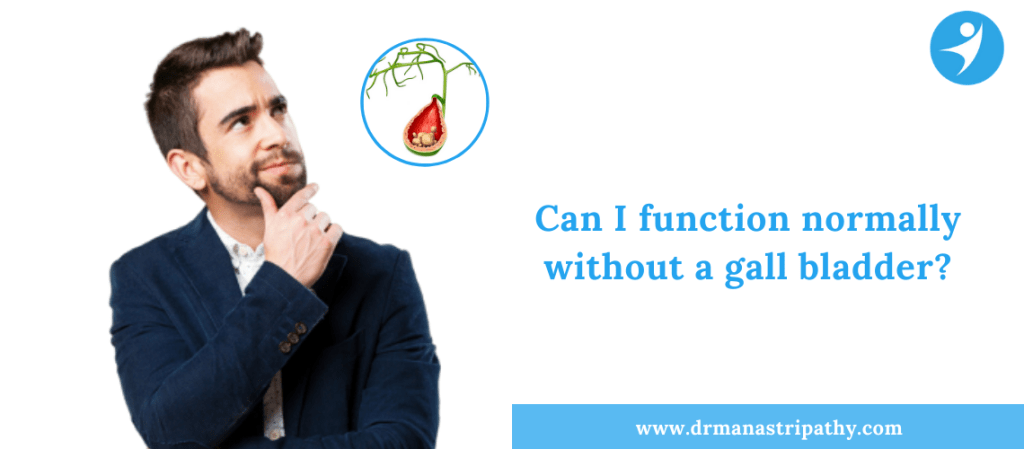
Can I function normally without a gall bladder?
Gall Bladder Functioning | Laparoscopic Cholecystectomy in Bangalore

Absolutely, you can. In the absence of gall bladder, the bile produced by the liver flows directly into the small intestine. However, this may stimulate the intestine which results in loose motion for nearly half of the patients. But, it isn’t a serious concern as it lasts only about 3-6 months. In case you experience this symptom, strictly follow a low-fat diet. After 4 to 6 months, you will return to normal status. 

Is my life expectancy affected?

Removing the gallbladder doesn’t affect your life expectancy. Neither does it shorten your life expectancy. On the other hand, it may increase your life expectancy due to the good, healthy dietary habits you will force to follow post the gallbladder surgery. Avoiding fats, oils, processed foods, and dairy products, will, in turn, reduce the chances of you developing high blood pressure, obesity, heart disease, and diabetes. The lower intakes of calories would result in your body is digesting your food and utilizing energy more efficiently.

Conclusion:

You must know that your body can function pretty well without your gallbladder. The removal of gallbladder doesn’t shorten your life expectancy. Moreover, the healthy dietary changes that you follow after surgery will make you healthier and probably help in living a longer life.

The only thing you have to be mindful of is your diet. Keep control of your diet and avoid any food that may be a factor for digestive issues. Introducing these healthy habits in your lifestyle will benefit you in the long run. In case, you find issues post-surgery, you should talk to your doctor. Give priority to your treatment methods after the gallbladder surgery.

For more information visit:
www.drmanastripathy.com

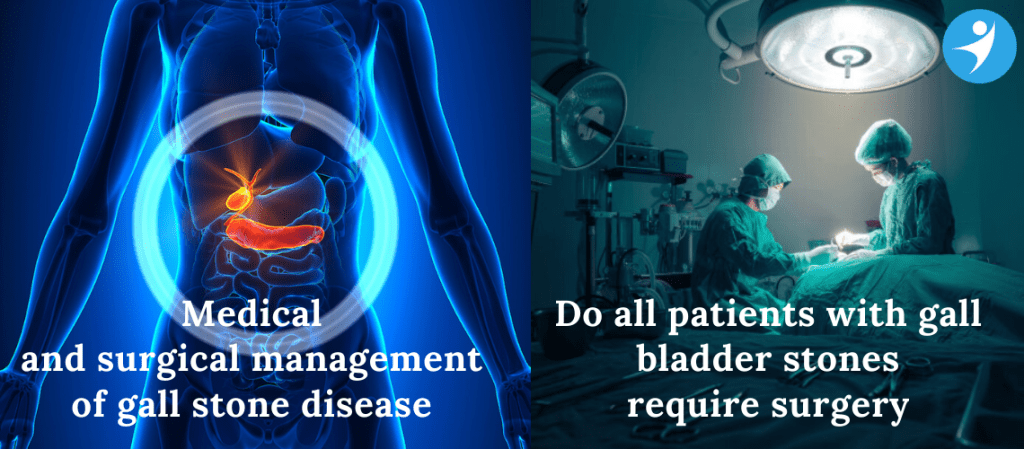
Medical and surgical management of gall stone disease / Do all patients with gall bladder stones require surgery

Gall stone is a common problem in India and most of the time the patient is confused about the treatment options available. Let us discuss the two option available for Gallstone treatment

Most of the time or the usual treatment for gallstones is surgery. In cetin cases doctors sometimes can use nonsurgical treatments to treat cholesterol stones. In the case of pigment stones, surgery is the recommended method

There are two methods of treatment for gallbladder stone:

  • Medical
  • Surgical

So let’s understand the two methods

1.     Surgical / Surgery

A gall bladder is a pear fruit shaped organ that helps in the storage of bile juice, a fluid that is helpful in digesting food. If it does not work in the right manner, then it starts forming fragments that are hard but these fragments can be small in size or they can be big in size as well. But you have to remember that these ball bladder stones do not go away just like that. If they start hurting your body, then the doctor might have to remove them. It is a surgery known as cholecystectomy that they have to perform.

It is believed that 80% of the people who have the problem of gall bladder stones have to go through the surgery. Not trying to scare you, but letting you know about the fact. You might want to know how many types of surgeries are there and about the best surgeons as well. So here are the types of cholecystectomy surgeries performed by surgeons:

  • Open cholecystectomy: As per this procedure, the surgeons have to lay a cut of 5 to 7 inches on your belly to let that paining gall bladder come out of your body. The scenarios in which you might need the surgery is if you are suffering from bleeding, if you have a rarest of a rare disease in the gall bladder, or if you are extremely over-weight or if you are in the last trimester of being pregnant.
  • Laparoscopic cholecystectomy: Best surgeons call it as “keyhole surgery”. In this, the surgeon does not give a huge cut on your belly. But he makes 4 small cuts on the belly. Then he puts a very thin tube with a video camera in your belly to check the position of your gall bladder stone and then he would insert the required equipment in removing the gall bladder stone.

2.     Medical or Nonsurgical treatments

In special cases or situations, doctors use nonsurgical treatments for gallstones.

In case due to some medical condition that prevents surgery then the doctor may opt for medical treatment. The treatment procedure maybe for a longer time or even for the rest of your life

Below mentioned are few nonsurgical treatments options that a doctor may use to remove or break up cholesterol gallstones:

  • Endoscopic retrograde cholangiopancreatography (ERCP). To remove the gallstone that is stuck in the common bile duct, sometimes doctors use ERCP
  • Oral dissolution therapy. There are certain medicines that contain bile acids that can break up gallstones. The mechanism of this medicine is to break the small cholesterol stone. Usually, the treatment is for a longer period of time
  • Shock wave lithotripsy. Usually, a doctor uses shock wave lithotripsy NIH external link to blast gallstones into small pieces. But these types of procedures are not used regularly.

So with the above content, it is clear that surgery is one of the best options to treat Gall bladder stone.

Let us discuss, do all patients with gall bladder stones require surgery

The doctor will decide whether you need surgery or not based on clinical evidence and the symptoms of gallstones. There’s no need for you to have surgery if there are no major problems and discomfort. You need surgery only if a stone goes into, or blocks, one of your bile ducts. This problem what doctors call a “gallbladder attack”. The pain is intense and can last for several hours

Gallstones can also lead to more serious problems if left untreated, like

  • Cholecystitis — an inflamed gallbladder
  • Pancreatitis — an inflamed pancreas
  • Cholangitis — inflamed bile ducts

There are several tests done just to see the effect of gallbladder gallstones are having on your health

Tests might include:

  • Blood test
  • Ultrasound
  • MRI HIDA (hepatobiliary iminodiacetic acid) scan
  • Endoscopic ultrasonography

Can I Try Other Treatments First?

With a proper diet plan, you can manage your symptoms for a short time. This includes reducing fatty foods. But you cannot prevent the Gallbladder attacks which is very painful

If your doctors feel that surgery is not a good option for you then he can prescribe a medication to dissolve your gallstones. This requires a long period of treatment and even if your gallstones do go away, there’s a chance they’ll return.

Conclusion:

According to Dr. Manas Ranjan Tripathy Gall bladder, stone management is very important as if left untreated it may cause emergencies. Based on clinical evidence and symptoms the doctor will take a call whether to do surgery or not. As per Dr. Manas Tripathy, around 80% of patients required surgery. He always says that “With the advance in technology like Laparoscopic Cholecystectomy it is very safe and effective”. So if we evaluate the risk and benefits then surgery is the best option for Gallstone treatment.

To know more, visit:www.drmanastripathy.com

What To Eat After Your Gallbladder Has Been Removed?

Best Laparoscopic Surgeon in Bangalore

Majorly people do not have to follow a special diet after going through the surgery of removing the gallbladder stone. The major reason behind it is because the gall bladder does not have any direct relation with the digestion so that it does not matter much if you were not being asked to follow a strict diet. In most of the cases, doctors suggest that patients can start eating normally after the surgery, but they do say that you should start with small meals with regular intervals of time.

But the doctors may suggest that during the initial phase post surgery, you should go for low-fat diet so that it does not make a major effect on the digestion. It is for your betterment only because the body is relatively weak after the surgery and then right after the surgery, any high-fat food that might create a problem for the digestion should be avoided. But once that phase has gone away, then the patients can go back to what they were eating before the surgery but they should inculcate the habit of having a healthy and balanced diet post surgery.

What should be avoided after surgery?

Right after the surgery, the doctors might ask the patients to avoid a lot of foods that could go ahead and create some or the other problem during the initial phase of the surgery. But here are some of the most important things that should be kept in mind right after you have got your gallbladder removed so that there should be no problem for the patient and for their closed ones as well. So kindly keep these things in mind that should be avoided so as to not invite any problem for anyone.

1. Drinks containing Caffeine-For the initial phase of the surgery, not only the doctors, but we would also suggest you that please-please do not for the drinks that contains caffeine. We strictly mean that the drinks like tea, coffee and cold drinks should be avoided at any point of time. If you continue having these drinks then it might become a huge problem because it would not let the scar to heal which would be there in your body after the surgery. These drinks would prolong the healing period. So please think about your health and avoid any such caffeinated drinks.

 Avoid Drinks Containing Caffeine | Best Laparoscopic Surgeon in Bangalore
Avoid Drinks Containing Caffeine | Best Laparoscopic Surgeon in Bangalore

2. Avoid Spicy or Fatty Foods-In the initial phase post surgery, it is extremely important that any of the spicy or the fatty foods should be avoided so that the digestive system of the body does not have to do much work in digesting the food and it should be easy for the body to do its work normally without any kind of problem in between. It is for your betterment only. These fatty or spicy foods would not do any good to you in the initial post surgery phase rather it would just increase your sufferings and nothing else.

Avoid Spicy or Fatty Foods | Best Laparoscopic Surgeon in Bangalore

Last Words…

It is extremely important that you should take care of your health after the surgery. We are not saying that it is a very big surgery but you should also keep this in mind that at the end, it is about your health only and there should be no risk at your health. So avoid any such food or drinks that might become a problem for you later on. Focus on improving your health so that it should get improved and it should be improved at a faster pace.

We wish you a speedy and health recovery!

Hernia Recovery- Do’s and Don’ts after Hernia Surgery

Hi everyone, welcome to the podcast series “Proctology and Laparoscopic Surgery”.

In today’s podcast,Dr. Manas Ranjan Tripathy-Best Hernia Surgeon in Koramangala, Bangalore is going to talk about Hernia Recovery – Do’s and Don’ts after Hernia Surgery.

This podcast is very important for hernia patients as we will discuss how patients can take care of themselves for faster recovery from Hernia surgery.

So, today’s podcast is very important. Listen to it carefully.

Is There An Ideal Time For Repair Of a Hernia?

Hi everyone, welcome to the podcast series “Proctology and Laparoscopic Surgery”.

In today’s podcast, Dr. Manas Ranjan Tripathy is going to talk about when is the ideal time for repair of a hernia? Or, How long can we wait before repairing a hernia? What are the risks of waiting longer before surgery?

So, today’s podcast is very important. Listen to it carefully.

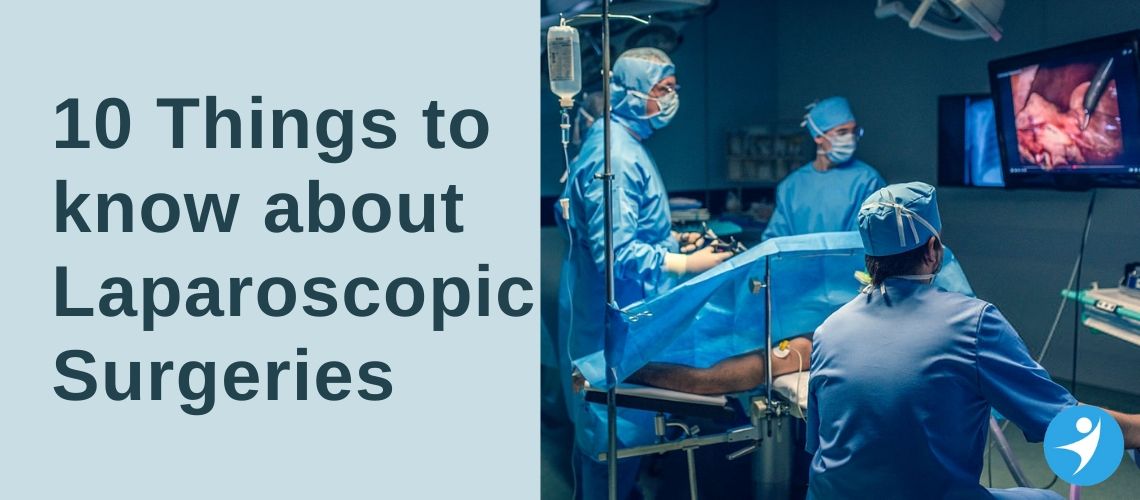
10 Things you wanted to ask about Laparoscopic Surgeries

things to know about laparoscopic surgery

Diagnostic laparoscopy, or simply known as laparoscopy, is a surgical technique that allows access into the organs situated in the abdomen region.

Laparoscopy consists of a small camera that helps to capture a view inside the abdominal organs. The instrument used to perform laparoscopy is the Laparoscope. It is a slender tool with a high-resolution camera and provision to impart high-intensity light. This narrow tube is inserted into the target organ through a small incision made in the abdominal wall. The images captured by the camera are then displayed on a monitor.

[Originally Published on http://drmanastripathy.com/blog/things-you-wanted-to-ask-about-laparoscopic-surgeries/]

Laparoscopy is a keyhole procedure that lets the doctor get a clear view inside the abdomen, without having to perform open surgery. This procedure even used to collect biopsy samples.

Therefore, it is a less invasive procedure that ensures a speedy recovery, high success rate and less painful.

1.Why is Laparoscopic surgery performed?

why laparoscopic surgery is performed

The abdomen is prone to a large number of complications such as pelvic/abdominal pain, internal bleeding, and pregnancy-related issues. Laparoscopic procedure aids in investigating the anomalies within the abdomen and further determining the treatment.

Diagnostic Laparoscopy is often performed on cases of liver disease, ascites, abnormal abdominal growth, internal bleeding, and cancer staging.

For diagnosis of problems associated with the abdomen, other imaging techniques such as ultrasound, MRI and CT scan are used. However, when these examination tools do not reveal enough information, Laparoscopy is the most reliable procedure.

2. What are the types of Laparoscopy? Which surgeries can be performed laparoscopically?

Laparoscopy procedure can be performed on a number of surgeries. The surgeries that are most commonly performed laparoscopically are:

  • Removal of the gallbladder (laparoscopic cholecystectomy)
  • Correction of hernia through laparoscopy
  • Removal of spleen (laparoscopic splenectomy)
  • Removal of liver or portion of liver (laparoscopic hepatectomy)
  • Pancreatic resectioning (laparoscopic pancreatectomy)

3. How is Laparoscopic procedure carried out?

laparoscopic surgery being carried out

While performing a Laparoscopic procedure, a minute incision of 0.5-0.6 inches is made around the navel.

Further, a slender tube is inserted into the incision made. Once the tube is through, carbon dioxide gas is channelled into the abdomen. The carbon dioxide swells up the abdomen which aids the surgeon to get a clear visual of the target area and even render more space to work. The laparoscope is then sent via the tube which captures the real-time image of the affected area and displays on the monitor.

In the cases where laparoscopy is performed for a surgical procedure, then another incision is made to transfer the small surgical devices. The visual on the monitor will aide the surgeons in further performing the surgery.

On the completion of the procedure, the carbon dioxide is pumped out of the abdomen. The incisions are then sutured and dressed.

4. How much time do laparoscopic surgeries take?

The time required to do laparoscopy depends on the purpose of the procedure. If laparoscopy is performed for examination and diagnosis, then the procedure typically takes about 30-60 minutes. However, if the laparoscopy is used for treatment, then the time taken is much longer depending on the surgery’s objective

5. Do laparoscopic surgeries cause pain?

In comparison to other surgical procedures, laparoscopy is a lot less painful. Immediately after the procedure, a small amount of pain in the shoulder and discomfort is observed for a few days. This pain can be relieved by medications. However, the recovery is much faster in the approach.

6. How safe are laparoscopic surgeries?

is laparoscopic surgery safe?

Laparoscopic surgeries are routinely performed with very high success rates. Although risks are very uncommon, intestinal surgery is often complicated. Some of the issues encountered are related to internal bleeding, infection, and administration of anaesthesia. Like any other procedure, laparoscopy is faced with these challenges.

But as laparoscopy is less invasive, the recovery and healing are much faster than other surgical procedures.

7. Among open surgery and laparoscopy, which is better?

The laparoscopic procedure eliminates the need to cut open the abdomen to perform a surgery. Thereby, they are less painful and less prone to infections. The patients are not required to spend a long duration at the hospital for recovery. As the incision made for performing the surgery is only about half an inch, the scar from the surgery is less.

You can read a bit more about the same in this article: Laparoscopic Surgery VS Traditional Open Surgery

8. What is the recovery period following the laparoscopic procedure?

The recovery time from laparoscopic surgery cannot be generalized. It varies from person to person. The main determining factor is the objective of the procedure.

If the objective of the procedure is the examine the target organs for a diagnosis, then the patient can be back on his feet with 5-6 days. If the procedure is done for removal of appendix then the recovery time can go up to 3 weeks. When surgery is done for more severe conditions such as removal of kidney or ovaries or treating cancer, the recovery period is much longer and it can be up to 10-12 weeks or more.

However, generally, for surgery of the same purpose, the time taken to recover from laparoscopic surgery is much lesser when compared to other traditional medical approaches.

9. When can one get back to driving after laparoscopy?

Again, the main factor here is the purpose of surgery undergone. If it is a simple examination, then one can drive after 48 hours of the laparoscopy. This lag time is to ensure that the anaesthesia completely wears off from the system. If the surgery is performed for a severe cause, then recover time is longer.

10. When should I see the doctor after the procedure?

Ideally, the next visit to the doctor after laparoscopy is after 2-6 weeks since the procedure. However, if you observe anything unfamiliar, then it is always recommended to see the doctor immediately.

Got any more questions about Laparoscopy surgery or any other Colorectal Diseases, feel free to contact us with your problem. Also, if you have any abdominal issue, consider booking a consultation session with Dr. Manas Ranjan Tripathy, the best Laparoscopic Surgeon in Bangalore.

Hernia Recovery – Do’s and Don’ts after Hernia Surgery

You are likely to suffer pains for a few days after undergoing hernia surgery. It is also common to feel tired, nauseated and as if you have flu or a low fever. In this article, we will discuss how we can speed up the process of post-surgery hernia recovery.

[Originally published on http://drmanastripathy.com/blog/dos-and-donts-after-hernia-surgery/]

But after 7 days or so, you’ll probably start feeling better. For several weeks, you may feel aches or stretch feel in the groin area while moving. It is normal for men to have bruises on the scrotum and along the penis after the surgery.

The type of Surgery 

Hernia surgery is carried out in two methods: one is the conventional open method and the other the Laparoscopic hernia repair.

The conventional method requires an incision in the skin directly over the hernia. The latter surgery takes place with the use of a small telescope known as a laparoscope. The Laparoscopic hernia repair method repairs hernia with very few incisions adjacent to the hernia making minimal invasions. Depending on the type of surgery, your hernia surgery recovery time would also vary. Recovery time for the conventional open method is comparatively more.

Care yourself at home

hernia recovery

You will obtain a general idea about your recovery and other related things through this article. However, each individual would recover after the surgery at a different pace. Besides, as mentioned above, it also depends upon the type of surgery you have undergone. Just follow the below-given steps to recover well and as soon as possible.

Do’s and Don’ts after Hernia Surgery

Here are some common recommendations on what you should and should not do after hernia surgery in order to prevent infection, avoid weight gain and coughing, and to enhance healing.

Activities

  • Rest: You should rest whenever you feel tired.
  • Showering: You may shower 24-48 hours after surgery depending upon the type of repair you underwent and if your doctor is fine with it. If you have gauze on the incisions, take it off prior to showering and later pat the incision dry. Consult your doctor regarding keeping your incision dry and if so, for how long.
  • Allow the area to heal. After surgery, it suggested that you don’t move swiftly or lift anything heavy until you feel completely fine. It would be better if you avoid lifting weights or engaging in sports or strenuous exercises for at least a few weeks. Your engagement in the activities will largely depend on the type of procedures you had for hernia repair. Again, make sure to get your doctor’s opinion on resuming exercise routines or sports.
  • Walking: Walking is a healthy decision as it increases blood circulation, which in turn, speeds healing without straining the abdomen.
  • Working: After 1 to 3 weeks you can most likely return doing light activities.

Diet

  • You are free to consume a normal diet. But if your stomach seems upset, you should try going for bland, low-fat food items like plain rice, toast, broiled chicken or yogurt.
  • In case, your bowel movements aren’t regular after surgery, then try avoiding constipation and straining. Also, drink plenty of water. Doctors would recommend having a stool softener, fiber, or a mild laxative.

Medicines

hernia medicine
  • Be careful with medicines. Get a consultation from your doctor on whether you can restart your medicines. He/she shall provide you with instructions about when and which new medicines can be taken by you.

Incision care

  • There will be a dressing over the incision area (cut) to aid in healing and protecting it. You will get guidelines from your doctor about taking care of this.
  • If there’s a skin adhesive or a liquid stitch on the incision, leave it there until it falls off. Sometimes you may have strips of tape on the cut. Leave the tape on for a week or until it falls off.
  • Your doctor will advise when to come back to have your stitches removed.
  • Wash the cut daily with warm, soapy water. After washing pat it dry. Do not use Hydrogen Peroxide or alcohol as it slows healing.
  • Put a block of ice or a cold pack on the area for about 10-20 minutes. Do this within 1 to 2 hours for the next 3 days or until the swelling goes off. Place a thin cloth between the ice and your skin.

WARNING SIGNS AFTER SURGERY

In case you notice any of the following, call your doctor and seek immediate medical care:

  • Your pain sustains even after taking medicines
  • Your incision comes open or has got your stitches loose
  • You find bright red blood-soaked in your bandage
  • You have loose stitches, or your incision comes open.
  • Bright red blood has soaked through your bandage.
  • Your stomach seems sick or you cannot drink fluid
  • You find signs of a blood clot in your leg ( known as a deep vein thrombosis). It may either result in pain in your calf, back of the knee, thigh, or groin; or redness and swelling in your leg or groin.
  • You are unable to pass stools or gas.
  • You see symptoms of infection. It may be in different forms such as:
    1. Excruciating pain, swelling, warmth, or redness
    2. Red streaks leading from the incision area
    3. Pus draining from the incision
    4. A fever

How likely is it that a hernia will come back after repair?

After hernia surgery hernia recurrence rates vary a lot and many studies suggest that 90 – 99% success rates are common. When compared to non-mesh repairs, in many cases mesh repairs offer a smaller chance of hernia recurrence rate. Unfortunately, some hernia repairs may lead to a very high incidence of chronic pain, which can range from 5-15%.

[Original Post: http://drmanastripathy.com/blog/will-hernia-come-back-after-hernia-repair/]

The main objective is to find a surgeon who has performed a lot of hernia surgery. Typically, an experienced surgeon will have better results with or without the use of mesh. There is no “one size fits all” approach to hernia surgery” and it all depends on the surgeon who decides what approach fits for an individual.

So lets us understand two important factors as what is Recurrent Hernia and what are the risk factors for developing a recurrent hernia after a primary repair.

One of the important risks associated with hernia repair surgery is that the hernia can return. A recurrent hernia is a process where a hernia repair fails and the hernia reappears.

Symptoms of Recurrent Hernia

Symptoms of Recurrent Hernia after Hernia Repair

A recurrent hernia – It is recognized as a bulge, sometimes painful, that appears at or near the site of the original hernia. Severe health complications occur if the hernia progresses and the intestines protrude into the hernia, such as:

  • Infection
  • Constipation
  • Nausea/vomiting
  • Loss of blood supply to the intestines

Causes: Recurrent Hernia

There is a variety of reason for a hernia to reappear, some of which may not always be clear. The following factors can place patients at an increased risk of a recurrent hernia:

  • Infection of a wound from initial hernia surgery
  • Being too active too soon after surgery
  • Chronic use of steroids
  • Chronic acute cough
  • Smoking
  • Obesity

The risk factors:

The risk factors for developing a recurrent hernia after a primary repair include


Surgeon factors:

  • Less number of surgeries or not an experienced hernia surgeon
  • Surgical inexperience of the initial surgeon
  • Open hernia surgery under local anaesthesia
  • Insufficient surgical technique of the surgeon including:
    • lack of mesh overlap
    • improper mesh choice
    • lack of proper mesh fixation

Patient factors:

  • Presence of a sliding hernia
  • Collagen disorders
  • Obesity
  • Chronic steroid use
  • Activity too early after surgery
  • Smoking, COPD, chronic cough
  • No mesh is used for initial repair
  • Initial mesh not fixed to the muscle strong enough

It is very important to understand that the presentation of hernia at the time of surgery is also a risk factor for recurrence. Like Large hernias, emergency hernia surgery etc have increased risk of recurrence then normal ones.

Non-surgical Treatments for Recurrent Hernia

Surgical intervention is very necessary in order to repair a recurrent hernia.

Surgical Treatment for Recurrent Hernia and Post-Treatment

Recurrent hernias can be one of the most challenging types of hernia to repair.

Laparoscopic recurrent hernia repair:

Usually, Individuals with a recurrent hernia are good candidates for laparoscopic repair because the muscles of the abdomen are weak and laparoscopic surgical techniques are useful to maintain the integrity of the muscles more so than an open hernia repair procedure. Also, scar tissue from previous surgery can be avoided when using laparoscopic equipment.

Open recurrent hernia repair:

Open repair may be necessary if the recurrent hernia is complex in order to properly restore the functionality of the abdominal wall. Open hernia repair allows surgeons to carefully move abdominal tissues to their original position and place mesh on both sides of the weakened muscle in order to provide additional reinforcement.

Conclusion:

There are certain factors responsible for recurrent hernia, but the latest technology and experience of your Surgeon reduces the risk of recurrent hernia after a primary repair include.

When is the right time for Hernia Surgery? Should I go under the scalpel now, or should I wait?

You have been diagnosed with a hernia, but it is not posing major problems for you. Your life goes on as before, albeit with minor discomforts, which you can live with. Medicines are not treating the hernia, but who likes to undergo surgery for hernia?

[Originally Published: http://drmanastripathy.com/blog/right-time-for-hernia-surgery/]

Undergoing surgery is not an easy decision to make. It can be tempting to ignore the hernia if there are no symptoms and that works in some cases. However, your decision should be based on medical grounds. Fully understand the risks and benefits of whichever course of action you take. There are certain things to take into account, which can best be discussed by your treatment specialist. Here are some of them:

How is the hernia affecting you?

hernia surgery in HSR Layout, bangalore

The first line of reasoning follows the symptoms you experience. Not all hernias manifest symptoms, especially when they are small. The most common symptom is a pain. Other symptoms can include a sensation of fullness or heaviness in the groin or in the stomach. However even if you do not have symptoms, hernias can still interfere with your work and lifestyle. Hence, you need to consider the extent to which the hernia is affecting your life.

You need to weigh the pros and cons of delaying surgery. If your hernia is small and causes only minor discomfort at present, it is no reason to be complacent. If left untreated the hernia will only grow with normal wear and tear of body tissues, physical activities and pregnancy. As it is, hernias do not treat themselves. Medication is effective only in alleviating the symptoms. The only way to treat hernia is through surgery.

But how long should you wait? If your hernia does cause painful symptoms, the doctor will likely recommend immediate surgery. After all, a small hernia is easier to remove than a bigger one with the associated costs. However, if there are minimal symptoms, the physician will recommend a studied waiting period. However, before the watchful waiting begins, be sure to communicate your actual medical condition to your doctor. Be fully honest about any physical limitations you are subject to due to your hernia.

The Risks of Waiting for

hernia surgery in Koramangala, bangalore

Hernias can get incarcerated: A potentially serious complication of not repairing a hernia in time is the possibility of it getting trapped outside the wall of the abdomen. This can cause the blood supply to the hernia getting cut-off. This obstructs the bowel and results in the strangulation of the hernia. When this happens, the patient needs to undergo emergency surgery. All hernias do not progress to this point, but since waiting can lead to this stage, you may want to consider simple surgery is better than waiting for the condition to become complicated.

Hernias will Grow: Even though you may have been diagnosed with a small hernia; it will keep growing during the wait-and-watch period. This will, in turn, increase the symptoms and their severity, causing acute disturbances to your lifestyle. Smaller hernias are easier to remove, entail a lesser convalescence period and is more cost-effective. Here, the issue is whether you should go ahead with the surgery now or wait to have it later when the stakes are comparatively higher.

Hernias Eventually Require Surgery: Studies have shown that the majority of hernia patients undergo surgery within ten years of being diagnosed. That’s a long waiting period for a treatment option that is considered ultimately inevitable. Hence, if surgery is the almost the only treatment option, the patient needs to consider whether a small surgery and total repair of the hernia may not be better than waiting for an uncertain future eventuality, where there would be no other option than a more complex and costlier surgery.

You’re Not Getting Younger: Age can be one of the most important determining factors in weighing the pros and cons of waiting. You will grow older during all the years you delay surgery, meaning that your body may not be in overall good shape; you will not be young as you are today. Having surgery at a more advanced age affects the procedure as well as recovery. Having surgery at an age when your body can better deal is far more beneficial. However, for elderly patients, who are not very active and whose hernia poses no problems or symptoms, it would be better not to have surgery. The risks may outweigh the benefits of repair.

Conclusion

Having surgery can never be an easy decision. There are so many things to consider. But hernias will not repair themselves; surgery is the only effective option in the majority of cases. A hernia operation repairs the affected region and helps it regain its previous stage of health. It definitely helps when you are in control of the decision and timing. You can decide to have the surgery at your convenience. If you’re a candidate for a laparoscopic hernia operation, recovery is smoother and faster. It cannot be reiterated enough that having a hernia operation at a younger age and with a smaller hernia is always beneficial in the long run.

Epigastric Hernia Repair in Adults in Bangalore

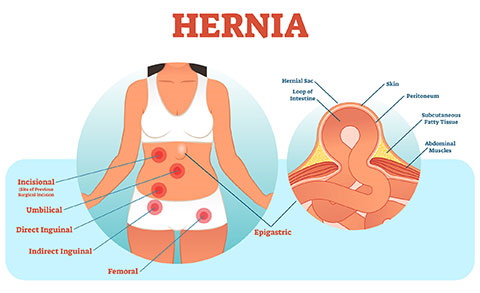
An epigastric hernia develops when fat juts out through a weakness in the abdominal wall between the umbilicus and sternum. The result is lump or hernia, which can be painful, particularly if the fat is pinched by the wall of the abdomen.

http://drmanastripathy.com/epigastric-hernia-repair/

Treatment for Epigastric Hernia:

The most common and popular treatment for a hernia is surgery. An operation is the quickest way to repair a hernia, particularly if the bulge is growing bigger. Timely surgery also preempts any serious complications that can accompany inguinal hernia. Sometimes, the hernia can be controlled with a padded belt called a truss. However, a hernia will not go away without surgery. 
Epigastric Hernia surgery can involve any anaesthetic techniques depending on the situation. The surgeon makes an incision in the abdomen and simply removes the ‘hernia sac’. The muscle layer is strengthened with sutures. A synthetic mesh will also be used to fortify the weak spot. The operation usually lasts for about three-quarters of an hour.

Surgical Procedure:

The operation to repair an epigastric hernia involves general anaesthesia and is usually over in about half an hour. The surgeon makes a cut on the hernia and frees the ‘hernial sac’. The surgeon will either remove the fat tissue or push it back. If tissues from the abdomen are also pushing through, they are placed back within the abdomen. The weak spot through which the fat pushed through to create the hernia is closed with stitches. For larger hernias, the weak spot is reinforced with a synthetic mesh.

Read more: Proctologist in Bangalore

Complications:

General side effects that may afflict the patient are the same as those after other hernia fixing surgeries. More serious complications may include:

  • Development of a lump at the surgery site
  • Injuries to nearby abdominal structures

Patients are generally discharged the same day. Convalescence may take between two to four weeks depending on the extent of surgery, after which you can resume normal activities. Check with the surgeon before the operation about how much you can exercise. For the first few days, increasing your walking is recommended. Occasionally the hernia can recur.

Design a site like this with WordPress.com
Get started